Alec Guinness’s “Clunky” Star Wars Gamble: A Jedi Masterstroke in Profit
Introduction: From Disdain to Galactic Fortune
In the annals of Hollywood history, few stories are as compelling and ironic as that of Alec Guinness and his involvement in “Star Wars.” The esteemed British actor, known for his roles in classics like “Lawrence of Arabia” and “The Bridge on the River Kwai,” initially viewed George Lucas’s space opera with profound skepticism. He famously described the script as “clunky fairy tale rubbish.” However, a shrewd decision – demanding a percentage of the film’s backend profits – transformed his disdain into a monumental financial triumph, a Jedi masterstroke that secured his legacy beyond the realm of arthouse cinema.
The Bard Meets the Bogeyman: Guinness’s Initial Reservations
In 1976, Sir Alec Guinness was an acting institution, a titan of stage and screen with a reputation for gravitas and artistic integrity. So, when a young, relatively unknown director named George Lucas approached him with a script about space battles, laser swords, and mystical forces, it’s understandable that Guinness raised an eyebrow. The sheer audacity of the premise, the seemingly childish dialogue, and the overall “B-movie” aesthetic clashed sharply with his refined sensibilities. He confided in friends his doubts, fearing it would tarnish his hard-earned reputation. He saw it as a step down from his usual fare, a detour into the land of sci-fi silliness.
The Agent’s Counsel: A Pragmatic Perspective
While Guinness harbored artistic reservations, his agent recognized the potential for a substantial payday. The offer on the table was generous, and the agent astutely advised Guinness to consider the financial implications. The actor, despite his initial reluctance, understood the practicalities of his profession. Even established actors need to secure their financial future, and the allure of a well-paying job, even one he didn’t entirely believe in, proved too strong to resist. This decision, though born of necessity, would ultimately prove to be far more significant than anyone could have predicted.
The Negotiating Table: Demanding a Piece of the Galaxy
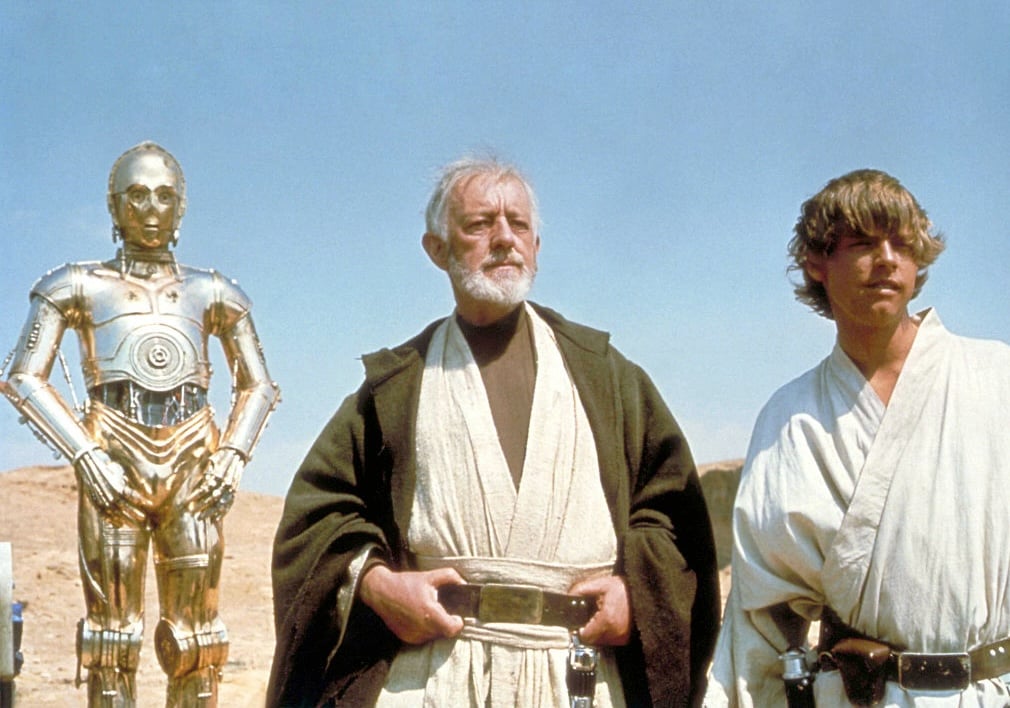
Guinness accepted the role of Obi-Wan Kenobi, but with a caveat. Instead of a standard upfront fee, he negotiated for a small percentage of the film’s backend profits – a move that would become legendary in Hollywood lore. While the initial offer was already lucrative, Guinness’s agent pushed for a share of the film’s success, anticipating that “Star Wars” might become a sleeper hit. Even Lucas himself, with his revolutionary vision, couldn’t have predicted the monumental phenomenon “Star Wars” would become. Guinness’s demand, though seemingly modest at the time, was a stroke of pure genius.
The Force Awakens: Star Wars Becomes a Cultural Phenomenon
When “Star Wars” premiered in 1977, it wasn’t just a movie; it was a cultural earthquake. Audiences flocked to theaters, captivated by its groundbreaking special effects, its compelling characters, and its universal themes of good versus evil. The film shattered box office records, spawning sequels, merchandise, and a global fanbase that continues to thrive decades later. “Star Wars” transformed the landscape of cinema and pop culture, and Alec Guinness, despite his initial skepticism, found himself at the heart of this unprecedented phenomenon.
Obi-Wan’s Influence: Beyond the Dialogue
Guinness’s performance as Obi-Wan Kenobi, the wise and enigmatic Jedi Master, became iconic. He brought a gravitas and depth to the character that elevated him beyond the typical sci-fi archetype. His subtle performance, his measured delivery, and his overall presence lent a sense of legitimacy and credibility to the fantastical world of “Star Wars.” He injected his decades of classical training into the role, creating a character that resonated with audiences of all ages. Obi-Wan Kenobi, thanks to Guinness’s performance, became a touchstone of the “Star Wars” universe.
The Financial Empire: Guinness’s Galactic Rewards
As “Star Wars” continued to generate billions of dollars in revenue, Guinness’s backend deal proved to be an extraordinary financial windfall. His small percentage of the profits translated into millions of dollars, securing his financial future and cementing his status as one of the wealthiest actors in Hollywood. The very film he had initially dismissed as “clunky fairy tale rubbish” became his greatest financial achievement, a testament to the power of foresight and a well-negotiated contract.
The Legacy: From Skeptic to Beneficiary
Alec Guinness’s story serves as a fascinating case study in the unpredictable nature of the entertainment industry. His initial skepticism towards “Star Wars” highlights the disconnect that can sometimes exist between artistic sensibilities and commercial appeal. However, his pragmatic decision to negotiate for a share of the profits demonstrates the importance of shrewd business acumen. In the end, Guinness not only benefited financially from “Star Wars,” but he also became an integral part of its enduring legacy. His performance as Obi-Wan Kenobi continues to inspire and entertain generations of fans, proving that even the most skeptical actors can find themselves contributing to cinematic history.
The Skeptic’s Afterthought: A Jedi’s True Value
Though his initial feelings towards “Star Wars” were lukewarm, Alec Guinness came to appreciate the film’s impact and its lasting legacy. He recognized its importance in the cultural zeitgeist and acknowledged the profound effect it had on audiences worldwide. While he may have continued to harbor some reservations about the script and the overall aesthetic, he ultimately embraced his role in the “Star Wars” saga and accepted his place as a beloved icon of science fiction cinema.
Conclusion: A Lesson in Galactic Proportions
The story of Alec Guinness and “Star Wars” is a powerful reminder that even the most seasoned professionals can be surprised by the unpredictable nature of success. His initial skepticism, followed by his shrewd business decision, ultimately transformed his perspective and his financial future. His tale serves as a valuable lesson for anyone working in the entertainment industry: never underestimate the power of a well-negotiated contract and the potential of a “clunky fairy tale” to become a galactic phenomenon.
FAQs
- Why did Alec Guinness initially dislike Star Wars?
- He considered the script to be poorly written (“clunky fairy tale rubbish”) and thought the film’s premise was absurd, fearing it would damage his reputation.
- How did Alec Guinness benefit financially from Star Wars?
- He negotiated a percentage of the film’s backend profits, which earned him millions of dollars as the film became a massive success.
- What was Alec Guinness’s role in Star Wars?
- He played Obi-Wan Kenobi, a wise Jedi Master who guides Luke Skywalker on his journey.