From $5 Scoops to Billion-Dollar Blues: The Ben & Jerry’s Saga
The Accidental Ice Cream Moguls: A Sweet Beginning
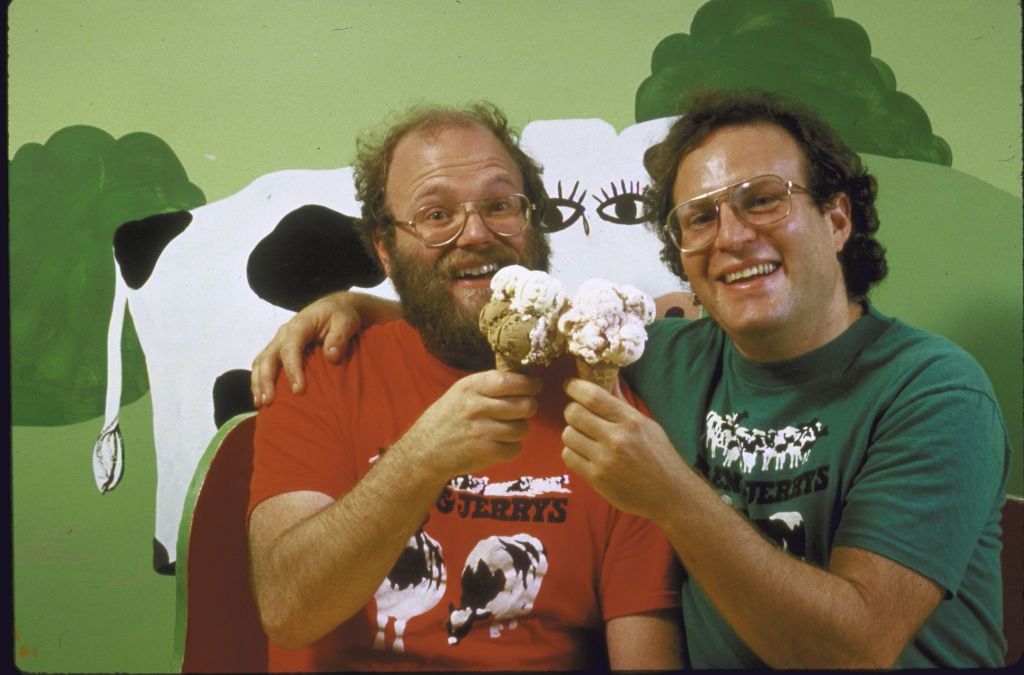
Ben Cohen and Jerry Greenfield, two lifelong friends hailing from Long Island, seemed unlikely candidates to build a culinary empire. Ben, a self-described failed potter, and Jerry, a rejected medical school applicant, found themselves at a crossroads. Fate, or perhaps just a shared love for food, intervened when they stumbled upon a $5 correspondence course on ice cream making. Armed with this newfound (and arguably limited) knowledge and a meager $12,000 investment (much of it borrowed), they transformed a dilapidated gas station in Burlington, Vermont, into their first ice cream parlor in 1978. This wasn’t just any ice cream shop; it was the birthplace of Ben & Jerry’s, a brand destined to become synonymous with quirky flavors, community activism, and eventually, corporate controversy.
The Secret Sauce: Chunks, Swirls, and Social Consciousness
What set Ben & Jerry’s apart wasn’t just their ice cream; it was their approach. They packed their pints with generous chunks of brownies, cookies, and other delectable additions, creating a texture and flavor profile that was revolutionary for the time. Flavors like Cherry Garcia (named after the Grateful Dead frontman) and Chocolate Fudge Brownie became instant classics. But their commitment extended beyond just deliciousness. From the beginning, Ben & Jerry’s integrated social consciousness into their business model. They championed fair trade practices, environmental sustainability, and progressive political causes, donating a significant portion of their profits to charity. This blend of indulgent treats and social responsibility resonated deeply with consumers, contributing significantly to their rapid growth.
Franchise Frenzy and Rapid Expansion
The unique combination of quality ice cream and a strong ethical stance fueled a rapid expansion. Ben & Jerry’s embraced the franchise model, allowing them to spread their brand across the country while maintaining a degree of control over the quality and values of each location. This growth wasn’t without its challenges. They had to navigate the complexities of managing a growing franchise network, ensuring consistency in product quality and adherence to their social mission. However, the demand for their distinctive ice cream continued to soar, pushing them further into the mainstream.
The Unilever Acquisition: A Deal with the Devil?
In 2000, Ben & Jerry’s faced a pivotal moment: the acquisition by Unilever, a multinational consumer goods giant. Ben and Jerry were aging and recognized they needed a strong partner to ensure the long-term viability of the brand. While the deal brought significant financial rewards to the founders and promised to protect their brand’s values through an independent board of directors, it also sparked concerns about the potential for corporate influence to dilute their social mission. Many saw it as a sellout, a betrayal of the very principles that had made Ben & Jerry’s so successful.
The Independent Board: Guardians of the Brand
A key element of the Unilever acquisition was the creation of an independent board of directors tasked with safeguarding Ben & Jerry’s social mission. This board was given considerable power, including the ability to influence decisions related to product sourcing, marketing, and political advocacy. While this structure provided some degree of protection, it also created a complex dynamic within Unilever, with the board sometimes clashing with corporate leadership over issues of social and political responsibility.
The Israel Controversy: A Corporate Headache Explodes
The commitment to social justice eventually led to a major controversy. In 2021, Ben & Jerry’s announced that it would no longer sell its products in the Israeli-occupied Palestinian territories, citing concerns about human rights. This decision sparked widespread backlash, with some accusing the company of anti-Semitism and others praising them for taking a principled stance. The move triggered legal battles, boycotts, and intense media scrutiny, creating a major headache for Unilever and highlighting the challenges of navigating complex geopolitical issues as a multinational corporation.
The Fallout: Boycotts, Lawsuits, and Public Outcry
The decision to cease sales in the occupied territories had significant repercussions. Retailers in some states pulled Ben & Jerry’s products from their shelves, and some investors divested from Unilever. The company faced lawsuits alleging discrimination and breach of contract. The controversy dominated headlines for months, tarnishing the brand’s reputation and raising questions about the limits of corporate activism.
Jerry’s Departure: A Bitter Ending?
On September 17, 2025, Jerry Greenfield announced his resignation from Ben & Jerry’s, citing irreconcilable differences with Unilever over the direction of the brand’s social activism. While he didn’t elaborate on the specific issues, his departure signaled a growing tension between the founders’ original vision and the realities of operating within a large corporate structure. This event underscores the inherent challenges of maintaining authenticity and social responsibility within a for-profit entity, particularly after a major acquisition. It also raises questions about the future of the brand’s commitment to its founding principles.
The Future of Ben & Jerry’s: Can Chunks and Activism Coexist?
The story of Ben & Jerry’s is a complex and fascinating case study in the intersection of business, social responsibility, and corporate governance. While the brand continues to be beloved by millions, its recent controversies have raised fundamental questions about the limits of corporate activism and the challenges of maintaining authenticity in a globalized world. Can Ben & Jerry’s continue to be a force for good while remaining a profitable and sustainable business under the Unilever umbrella? Only time will tell if the company can navigate these challenges and continue to embody the values that made it so iconic.
Conclusion: Lessons from a Sweet Success Story
The Ben & Jerry’s story is a testament to the power of innovation, social consciousness, and a healthy dose of quirkiness. However, it also serves as a cautionary tale about the complexities of scaling a business, navigating corporate acquisitions, and balancing profit with purpose. The brand’s journey from a humble ice cream parlor to a global icon, and its subsequent struggles with corporate control and social responsibility, offer valuable lessons for entrepreneurs, business leaders, and anyone interested in the evolving role of business in society.
FAQs
- What was the original investment in Ben & Jerry’s?
- The initial investment was around $12,000, with a significant portion borrowed.
- Why did Ben & Jerry’s get acquired by Unilever?
- Ben and Jerry were aging and wanted to ensure the long-term viability of the brand. They needed a stronger partner to protect their brand’s values.
- What is the role of the independent board of directors?
- The independent board is responsible for safeguarding Ben & Jerry’s social mission and ensuring that the company continues to uphold its values.